Transforming the School System: From Moral Hunch to Meaningful Change
The global school system stands at a crossroads.
Across continents, educators, parents, and advocates share a growing conviction that mainstream schooling is not merely failing to educate children—it may be inadvertently harming them.
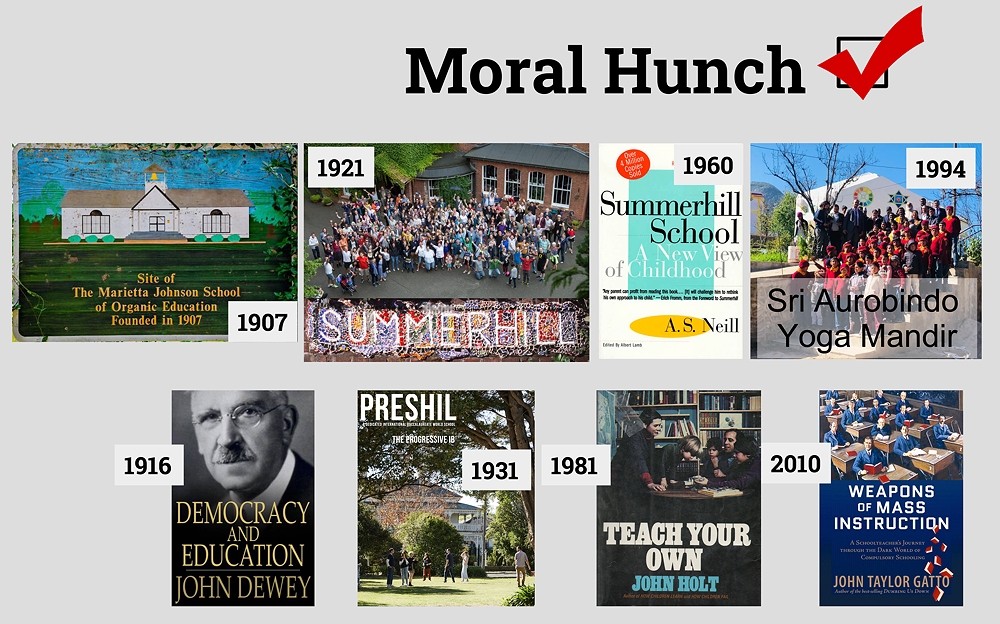
This moral hunch has fueled over a century of alternative approaches, yet meaningful transformation remains elusive.
How do we move from scattered alternatives to systemic change?
Learning from Historical Transformations
History offers instructive parallels. Consider germ theory in medicine.
Today, the idea that germs cause disease is so universally accepted that even during recent global health controversies, no credible voice questioned it.
Arguments centered on how best to combat identified pathogens, not whether germs exist.
Before germ theory became a social fact, however, the movement supporting it had to achieve what can be called external coherence—the ability to make clear, specific political demands.
The 1910 Flexner Report, which called for reorganizing medical education in the United States, exemplifies this stage.
Yet external coherence was only possible because internal coherence had already been achieved.
In the 1860s, Joseph Lister and Louis Pasteur articulated germ theory properly.
Even earlier, Ignaz Semmelweis in the 1840s had demonstrated effective practices, though they remained scattered and inconsistently applied.
The stakes were enormous.
In the late nineteenth century, a patient on an operating table faced greater risk of death than a soldier at Waterloo.
Infection rates in the best hospitals ranged from fifty to eighty percent, with over half of those infected dying.
Despite having the correct theory, mainstream hospital practice took over sixty years to change.
The Flexner Report found that most medical schools relied on apprenticeship—"watch the old guy; do what he does"—perpetuating ineffective practices.
Flexner highlighted how few schools taught biology, the basic science constraining plausible medical practice.
Today, hospital infection rates are under seven percent, and deaths from those infections under six percent.
Germ theory did not eliminate infection and death, but it enabled an order-of-magnitude improvement in prevention.

Internal and External Coherence in Movements
Not every movement achieves the status of a pervasive social fact.
Environmentalism, for example, has clear political demands and has operated from a position of external coherence in the United States since at least 1970, when Earth Day and the Environmental Protection Agency were established.
Yet environmental policies remain controversial, and resistance persists.
Internal coherence for environmentalism emerged earlier, perhaps before the 1950s, when Rachel Carson's Silent Spring became a bestseller and the deep ecology movement began to form.
Internal coherence means that influential experts in a field reach consensus about its most basic constraints.
Medicine is constrained by biology; human survival is constrained by planetary ecology.
The progression is clear: a moral hunch gives rise to internal coherence among experts, which then enables external coherence—clear, specific political demands that both allies and opponents understand.
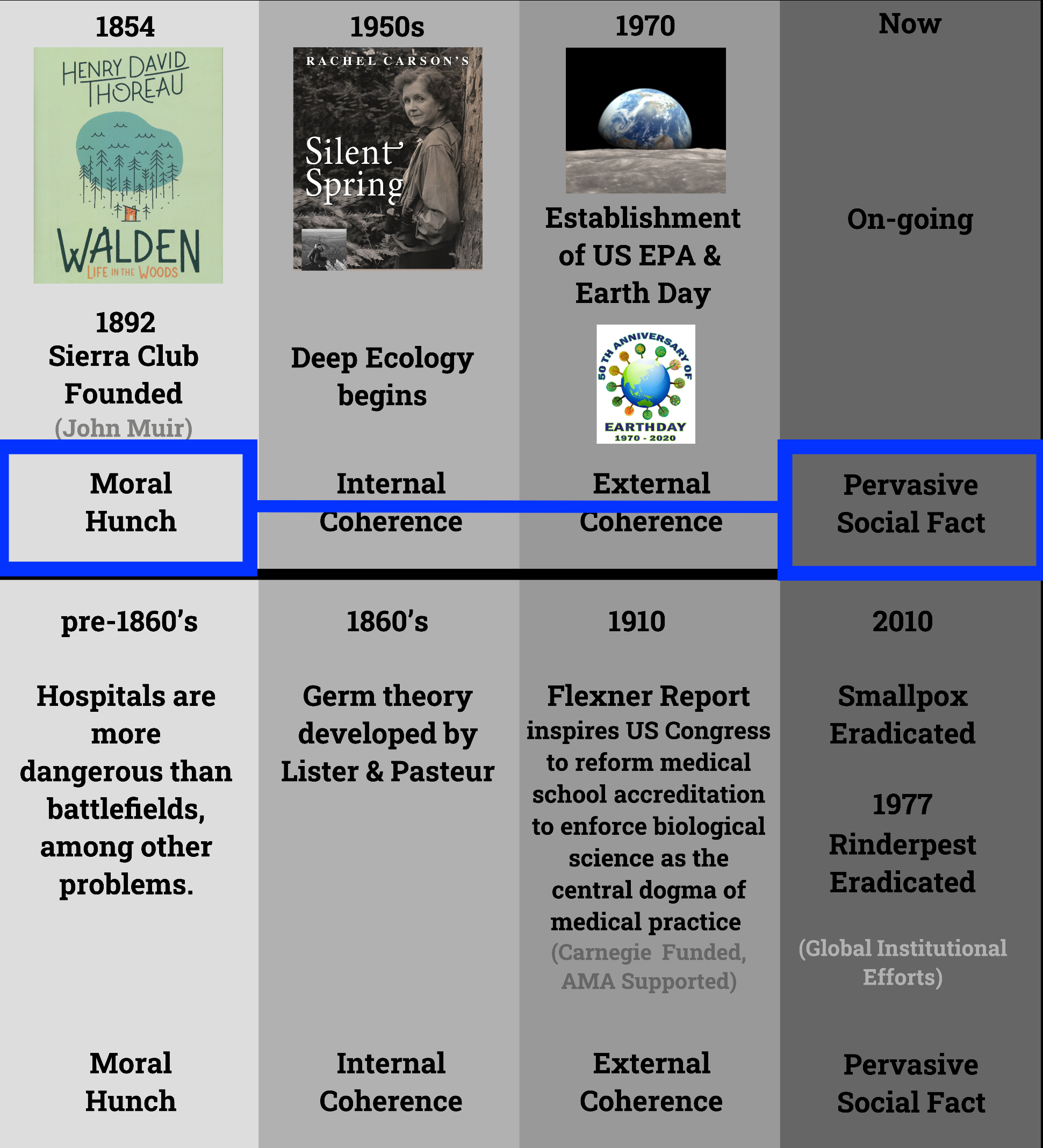
The School System's Missing Step
In education, the moral hunch has been well articulated for over a hundred years. Yet internal coherence remains absent.
At conferences on four continents, spanning mainstream and radical alternatives, I have observed that it is rare for potential allies to even be aware of each other's existence.
Influential experts have not yet reached consensus on the basic science constraining plausible educational practice.
This is where the most important work lies.
A robust scientific foundation exists upon which internal coherence can be built: the psychological framework known as Self-Determination Theory.
This theory offers the constraints for education that biology provides for medicine and ecology provides for environmentalism.

The Deeper Learning Resolution: A Tool for Unity
The Deeper Learning Resolution was proposed in my book Schooling for Holistic Equity as a tool for organizing disparate voices across the education world. (Read the Deeper Learning Resolution PDF, 6Mb)
By publicly supporting the resolution, individuals and organizations can recognize a small set of scientifically established facts that constrain the field of education.
From this starting point, it becomes possible to build toward clear, specific political demands. Learning about the resolution as an individual is a first step.
Organizing campaigns to have schools, businesses, and nonprofits officially adopt it is the next.
Once an organization adopts the resolution, the work continues: holding leaders accountable for implementing appropriate measures.
Certain kinds of formative school & classroom climate assessments will be needed to guide schools through the change process.
As a coalition of publicly declared allies grows, planning for political demands on legislators and government agencies can proceed.
This approach mirrors the historical path from moral hunch to pervasive social fact.
An Invitation to Join the Movement
For those who share the ambition to see the global school system transformed into a more humane and effective system for educating children, the invitation is open.
Discussing how to achieve internal coherence as a movement is the essential next step.
The school system can change.
History shows that even the most entrenched practices yield to movements that achieve internal and then external coherence.
The path is long, but it is navigable—and it begins with consensus among those who share the moral hunch that children deserve better.
Links:
Read the Deeper Learning Resolution (PDF, 6Mb)
Formative school & classroom climate assessments
This article was printed from HolisticEquity.com
Stay informed by joining at FullyEngage.org.
Recent Articles


-
Host Schools Wanted
May 10, 26 12:25 PM
QuixotiCon is an EdCamp-style in-person unconference for local educators who recognize that nurturing children is the only true foundation for educating them. -
Is restorative justice removed from reality? Yes, sort of.
Mar 21, 26 02:22 PM
 Restorative justice is delusional when it is embedded in bureaucracy without carefully maintained protections from the meddling of bureaucrats.
 -
Defense Against The Dark Arts Course Interest Page
Mar 13, 26 02:42 PM
 The Defense Against the Darks Arts course for distinguishing education from indoctrination is in development, learn more here.